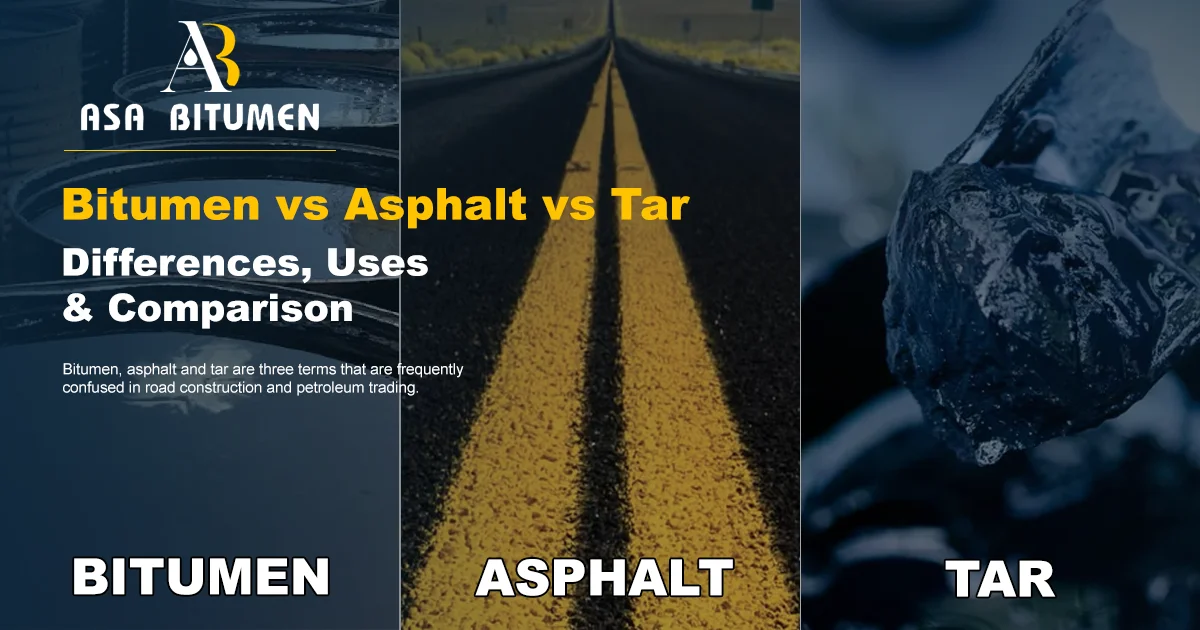
Bitumen vs Asphalt vs Tar: Differences, Uses & Comparison
Bitumen, asphalt and tar are three terms that are frequently confused in road construction and petroleum trading.
For someone outside the industry, they may look similar because all three are dark materials associated with roads and construction.
From a technical and commercial point of view, however, they are not the same product.
The simplest explanation is this:
Bitumen is a petroleum-based binder.
Asphalt is generally a mixture of bitumen and mineral aggregates used for paving.
Tar is a different material, traditionally produced from the destructive distillation of materials such as coal or wood.
For contractors, importers, and bitumen buyers, understanding these differences is important because specifications applications, handling requirements and purchasing decisions are completely different.
At ASA Bitumen we deal with international bitumen inquiries regularly and one of the first things we confirm with a buyer is exactly which product and specification the project requires.
Understanding the Bitumen vs Asphalt difference is important for contractors, importers, engineers, and buyers because these materials have different origins, compositions, applications, and specifications.
What Is Bitumen?
Bitumen is a dark highly viscous petroleum-based material primarily used as a binder in road construction.
Refinery bitumen is produced from the heavier fractions remaining during crude oil refining and can subsequently be processed or blended to achieve different specifications.
In international trade, bitumen is supplied in several classifications depending on the required application and standard.
These include Penetration Grade Bitumen, such as 60/70 and 80/100; Performance Grade Bitumen; Viscosity Grade Bitumen; Oxidized Bitumen; Cutback Bitumen; and Bitumen Emulsion.
The largest application for bitumen is road construction where it binds aggregates together to produce asphalt pavement.
Bitumen is also used in waterproofing roofing sealing insulation and various industrial applications.
For international buyers the important point is that bitumen should never be purchased simply as a generic commodity.
The correct grade specification origin, packing, and delivery method must be confirmed before an order is finalized.
What Is Asphalt?
Asphalt in road construction generally refers to the finished paving mixture produced by combining bitumen with mineral aggregates, while the asphalt binder provides the binding properties.
In simple terms bitumen acts as the binder while aggregates form the structural body of the asphalt mixture.
This distinction is particularly important in international trade.
When a contractor purchases Bitumen 60/70 for an asphalt plant the cargo being imported is bitumen rather than finished asphalt.
The asphalt is subsequently produced by combining that bitumen with the required aggregates according to the asphalt mix design.
Terminology can vary between countries especially where the word asphalt is informally used to describe the binder itself.
For commercial transactions however we always recommend using the exact technical product name and specification to avoid misunderstanding between buyer seller laboratory and shipping parties.
This basic distinction is at the heart of the Bitumen vs Asphalt comparison.
What Is Tar?
Tar is a dark viscous material that can be produced through the destructive distillation of organic materials such as coal wood or peat.
Coal tar was historically used in road construction and protective applications but it is chemically different from petroleum bitumen.
This distinction matters because tar and bitumen have different compositions properties applications and health and environmental considerations.
Modern road construction relies predominantly on petroleum-based bituminous binders rather than traditional coal tar.
For this reason a buyer requesting road paving material should confirm the project specification rather than using the terms tar and bitumen interchangeably.
Bitumen vs Asphalt
Understanding the Bitumen vs Asphalt difference is essential for distinguishing the binder from the finished paving mixture used in road construction.
Bitumen is the binder.
Asphalt is the paving mixture containing bitumen and aggregates.

Bitumen provides adhesion waterproofing and binding properties while aggregates provide much of the structural framework of the asphalt mixture.
This means a bitumen exporter normally supplies the binder to an importer contractor distributor or asphalt plant.
The asphalt mixture itself is generally manufactured closer to the construction project because it must be produced and placed under controlled conditions.
This distinction is particularly important when requesting quotations.
An inquiry for Bitumen 60/70 CIF destination port is fundamentally different from an inquiry for asphalt paving material delivered to a construction site.
In a Bitumen vs Asphalt comparison, bitumen is the binding material, while asphalt is the finished paving mixture used for road construction.
| Property | Bitumen | Asphalt | Tar |
|---|---|---|---|
| Origin | Petroleum refining | Bitumen + aggregates | Destructive distillation |
| Main role | Binder | Paving mixture | Historical/industrial material |
| Main use | Road construction, waterproofing, roofing | Roads, highways, parking areas | Sealing, preservation, industrial uses |
| Composition | Hydrocarbon-based binder | Aggregates + bituminous binder | Complex organic compounds |
| International trade | Commonly traded | Usually produced near project site | Much less common in modern road paving |
| Road paving | Used as binder | Finished pavement material | Limited modern use |
Bitumen vs Tar
Bitumen and tar may appear similar but their origins and chemical compositions are different.
Petroleum bitumen is derived from crude oil refining while traditional tar is produced through destructive distillation of organic materials particularly coal.
Bitumen has become the dominant binder for modern road construction and is available under internationally recognized grading systems.
Tar has historically been used for applications including sealing preservation and certain industrial purposes but it should not automatically be considered an alternative to paving grade bitumen.
For procurement purposes the project specification should always determine which material is acceptable.
Difference in Origin
Origin of Bitumen
Commercial petroleum bitumen originates from crude oil refining.
After lighter petroleum fractions are separated heavier refinery streams remain and can be further processed to produce bitumen with the required properties.
The characteristics of the final product depend on crude source, refinery configuration, production method and the specification being targeted.
Origin of Asphalt
Asphalt is produced by mixing selected mineral aggregates with a bituminous binder according to a defined mix design.
Its final performance therefore depends not only on the bitumen but also on aggregate grading binder content additives production temperature and pavement design.
Origin of Tar
Tar is produced through destructive distillation of organic materials in the absence or limited presence of oxygen.
Coal tar is the form most commonly associated with historical road and industrial applications.
Differences in Applications
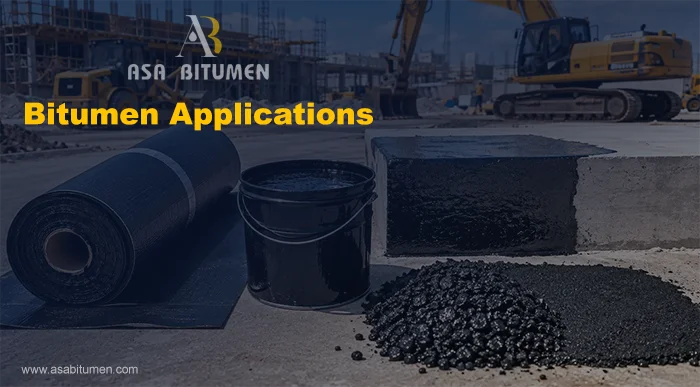
Bitumen Applications
Bitumen is used extensively in the following applications:
- Road construction
- Highway paving
- Airport runways
- Asphalt production
- Waterproofing
- Roofing
- Sealing
- Protective coatings
- Industrial applications
Different applications require different bitumen grades.
For example a paving project requiring Penetration Grade Bitumen should not automatically substitute that material with Oxidized Bitumen or Cutback Bitumen simply because all of them are classified as bituminous products.
Asphalt Applications
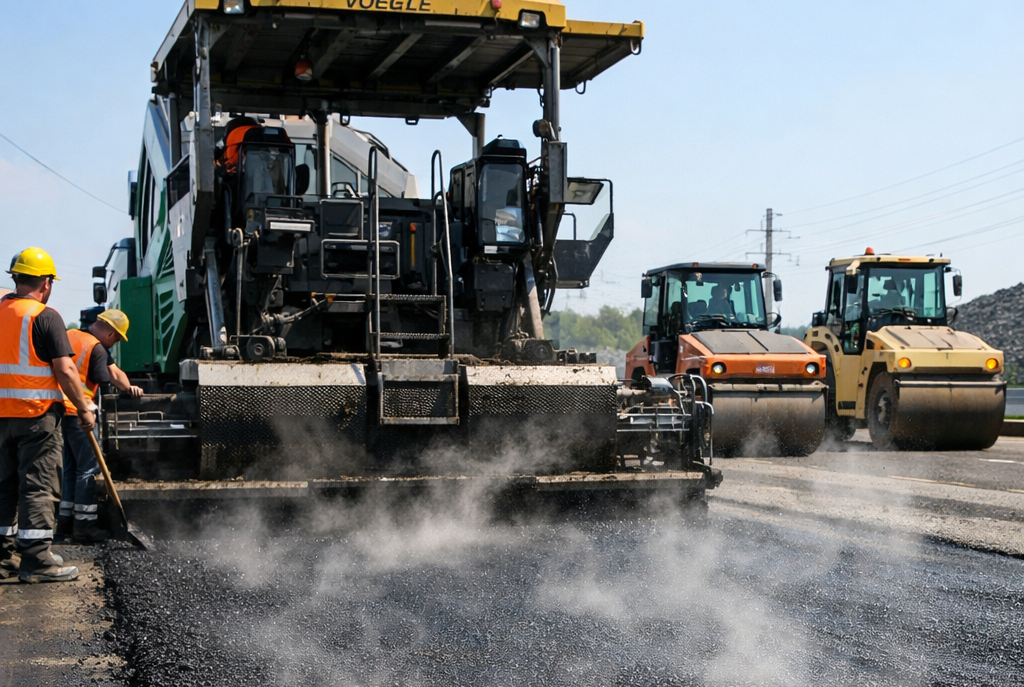
Asphalt is predominantly associated with pavement construction.
It is used for highways urban roads airport surfaces parking areas industrial yards and numerous other paved surfaces.
Different asphalt mix designs are selected according to traffic, climate, structural requirements and project specifications.
Tar Applications
Tar has historically been used in applications including surface protection wood preservation sealing and various industrial processes.
Its use in modern road construction is considerably more limited than petroleum bitumen.
Physical Differences Between Bitumen Asphalt and Tar
The three materials differ significantly in physical form composition and behavior.
Bitumen can range from relatively soft and workable material to much harder grades depending on its specification and temperature.
Tar is generally a viscous dark liquid or semi solid material whose properties depend heavily on its source and production process.
Asphalt is a composite material consisting mainly of mineral aggregates bound together by bitumen.
For this reason directly comparing a physical property such as density between bitumen and asphalt can be misleading.
They are fundamentally different materials rather than simply different grades of the same product.
This is another important point to consider when evaluating Bitumen vs Asphalt for a specific project.
Chemical Differences Between Bitumen Asphalt and Tar
Bitumen is a complex mixture of hydrocarbons containing different molecular fractions commonly discussed in terms of saturates aromatics resins and asphaltenes.
Its balance between these components influences characteristics such as viscosity hardness adhesion temperature susceptibility and aging behavior.
Tar has a different chemical composition and depending on its origin may contain significant concentrations of aromatic compounds.
Asphalt inherits part of its chemical behavior from the bituminous binder used in the mixture while its overall performance also depends heavily on aggregates fillers additives and mix design.
For road engineers and professional buyers this is why product selection should be based on specification and test results rather than appearance.
Terminology and definitions for road and paving materials are also addressed in ASTM D8, Standard Terminology Relating to Materials for Roads and Pavements.
Which Is Better for Road Construction? Bitumen, Asphalt or Tar?
This question is slightly misleading because bitumen and asphalt perform different functions.
Modern asphalt pavement requires a binder and bitumen is one of the principal binders used for this purpose.
The bitumen is supplied to the asphalt producer and mixed with aggregates to manufacture the asphalt mixture that is eventually laid on the road.
The more important question for a buyer is therefore:
Which bitumen grade is suitable for my asphalt and road project?
The answer depends on several factors including climate, pavement temperature, traffic loading, road design, local standards, and project specifications.
Common requirements may include Penetration Grade Bitumen 60/70 or 80/100 while other projects specify Performance Grade or Viscosity Grade binders.
There is no single grade that should be recommended for every project.
How to Choose the Right Bitumen for Your Project?
From a commercial perspective I always recommend starting with the technical requirement before discussing price.
A professional inquiry should ideally include:
- Required bitumen grade
- Technical specification or standard
- Required quantity
- Packing preference
- Destination port
- Required Incoterm
- Expected delivery schedule
Once these details are available we can evaluate both the technical requirement and the commercial structure of the shipment.
This matters because the cheapest FOB bitumen is not necessarily the cheapest product after delivery.
packing efficiency, container payload, ocean freight, inspection requirements, and destination costs can materially change the final landed cost.
Bitumen Price and International Purchasing
There is no universal fixed price for bitumen.
International bitumen prices are affected by feedstock values, regional supply and demand, grade, packing, quantity, origin, currency movements, logistics, and ocean freight.
A buyer should therefore compare offers on the same commercial basis.
An FOB quotation should not be directly compared with a CFR or CIF quotation without separating the freight insurance packing and other applicable costs.
The same applies when comparing different packing methods.
For a professional procurement decision we recommend evaluating the complete landed cost together with product specification inspection conditions payment terms and shipment schedule.
Buying Bitumen from ASA Bitumen
ASA Bitumen supplies different bitumen grades to international buyers including importers distributors contractors asphalt producers and infrastructure companies.
Our supply portfolio includes Penetration Grade Performance Grade Viscosity Grade Oxidized Cutback and other bituminous products according to project requirements.
The purchasing process is straightforward:
Send Inquiry → Confirm Specification → Receive Quotation → Confirm Order → Production or Preparation → Quality Inspection → Shipment.
Before quotation, our commercial and technical teams review the required grade quantity packing destination and delivery terms.
Depending on the transaction we can provide FOB CFR and CIF quotations and arrange suitable export packing and international shipment.
Quality and technical documentation can also be provided according to the agreed requirements.
Final Thoughts
Bitumen vs asphalt and tar may look similar but they should never be treated as interchangeable products.
A clear understanding of the Bitumen vs Asphalt distinction helps buyers select the correct material and specification for their project.
Bitumen is primarily the binder used in asphalt production.
Asphalt is the finished mixture of bitumen and aggregates used for pavement construction.
Tar has a different origin and chemical composition and today plays a much smaller role in modern road paving.
For buyers, the distinction becomes even more important when preparing an RFQ or evaluating competing offers.
The right purchasing decision starts with the correct specification and continues through quality control, packing, logistics, and commercial terms and final landed cost.
If you are planning a bitumen purchase for a road project asphalt plant distribution business or long term supply program contact ASA Bitumen with your required grade quantity and destination.
Our team will review the technical requirement and provide the most suitable commercial and logistics solution for your shipment.
Jahan Oskoueifar
Chief Commercial Officer
Oil & Petroleum Products Market Analyst and Futurist with more than 11 years of experience in international bitumen and petroleum product trading and exports